Warhound Secures $200 Million to Engineer Military Canines
Backed by Sequoia and intelligence-linked investors, the startup aims to produce genetically optimized dogs for defense and law enforcement roles.
By Jonathan Pierce ·
The startup Warhound has emerged from stealth mode with a $200 million funding round, a significant capital injection that values the company at $1.2 billion. The new financing comes from a consortium of investors including Sequoia, 8VC, Corner Ventures, and In-Q-Tel, a venture firm supported by the CIA and other U.S. intelligence agencies. This financial backing signals a serious industrial push to modernize the U.S. military’s working dog program through genetic engineering and advanced hardware.
The core mission of Warhound is to address a critical supply chain vulnerability in national defense. Currently, more than 80 percent of working dogs used by the U.S. military are sourced from Europe, and fewer than half of those imported animals are deemed fit for service upon arrival. This dependence on foreign breeding stocks highlights a dwindling domestic supply, prompting the need for a self-sufficient solution that can produce canines specifically tailored for demanding operational environments.
The venture is a collaboration between Ben Lamm of Colossal Biosciences and Anduril co-founder Palmer Luckey. Lamm, who met Luckey approximately a year ago at a conference, identified the issue of inherited health problems in working dog breeds, such as poor eyesight, cancer predispositions, and hip dysplasia. By studying high-performing breeds like the Belgian Malinois and German Shepherd, the team has established a biobank of cell lines to edit genes, aiming to create a new type of dog with enhanced speed, agility, and olfactory capabilities for bomb detection and search operations.
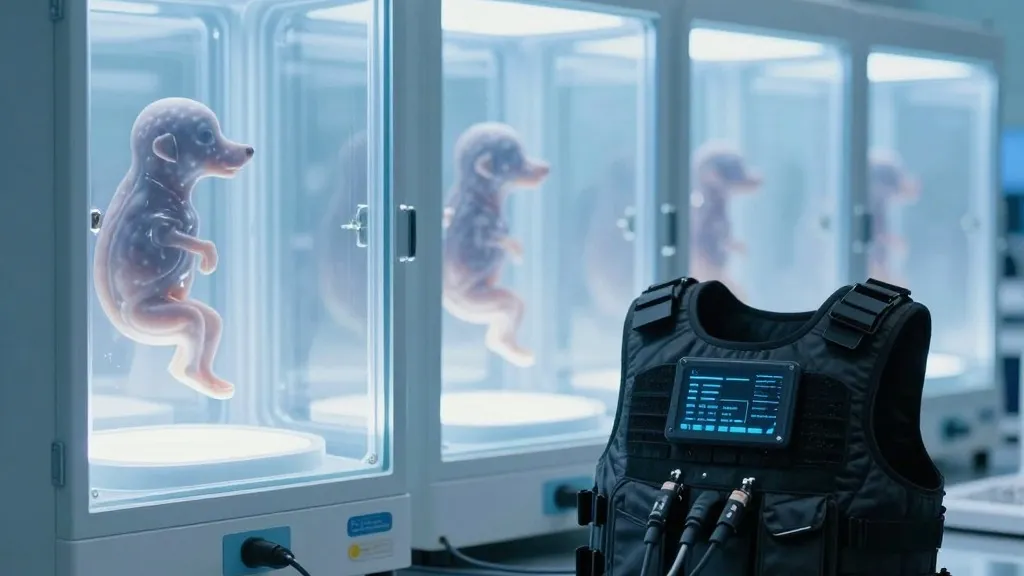
While Colossal provides the genetic engineering foundation, Anduril will supply the technological hardware and software. This includes protective vests and goggles equipped with data sensors, designed to improve situational awareness for both the dogs and their human handlers. Lamm described this approach as placing enhancements “on top of the dog, not in the dog,” suggesting that the combination of genetic health and technological protection will lead to better performance and safety in the line of duty.
In terms of corporate structure, Luckey serves as a partner in the venture but holds no equity, while Colossal Biosciences owns a stake and licenses its gene-editing technology to the new entity. Colossal, previously known for its de-extinction efforts, is leveraging its expertise in AI and gene cloning to support Warhound. Another Colossal-owned company, Viagen, will handle the cloning process, utilizing technology with a high success rate that has been previously applied to endangered species conservation.
The timeline for deployment is ambitious. The first batch of dogs is scheduled to be cloned and incubated shortly, with births expected early next year. The company aims to have these canines in active service within two years. While pricing has not yet been determined, Warhound intends to sell its products to the Department of Defense, military service groups, police forces, and other first responders. Lamm noted that the company has already briefed numerous government groups on its operations.
To ensure ethical standards and public acceptance, Warhound is working under the guidance of the American Humane Society to certify its training program. The organization stated that it is pleased to have a seat at the table to ensure the animals are treated humanely. Additionally, the company hopes that retired Warhound dogs will enter the Society’s Military Working Dog Reunification Program, providing them with homes after their service concludes. Each dog will be trained like any standard military working dog and managed by the purchasing agency.
As the company moves toward its first births, the focus remains on creating a sustainable domestic pipeline for military working dogs. By combining genetic optimization with Anduril’s technological suite, Warhound seeks to reduce the physical risks faced by both the animals and their human handlers. The successful implementation of this program could fundamentally alter how the U.S. equips its forces for dangerous tasks, moving away from reliance on imported stock toward a domestically engineered solution.
Source: TechCrunch